


How to Turn a Business Idea Into Action

During my twenty-five-plus years as an entrepreneur serving small business owners and entrepreneurs, I've heard hundreds of business ideas and helped write and edit dozens of business plans. Some became successful businesses. Some changed dramatically before they ever reached the market. Others never made it beyond the idea stage.
Ideas are exciting. I’ve had ten or so since the beginning of the year. I’ve had a few extra this last month alone. Acting on them can be terrifying.

One of the biggest things standing between an idea and action is fear. I am very familiar with fear, whether it's fear of success or fear of failure.
Fear creates questions. What if it doesn't work? What if someone else has already done it? What if I don't know enough? What if people don't buy it?
Then comes the overthinking. We convince ourselves we need the perfect name, website, logo, business plan, pricing, systems, and answers to questions no one has even asked yet. Before long, an idea that once felt exciting starts to feel overwhelming.
I've learned that you don't need to have everything figured out to move forward. You need a next step.
1. Start With Why This Idea Matters to You
Before getting too far into how you're going to build the business, I like to ask people why they want to build it in the first place. Why this product? Why this service? What's your connection to it?

Is it simply an opportunity to make money, or is there something about the problem, people, industry, or work that genuinely matters to you? There is nothing wrong with wanting to build a profitable business. Profit matters. But entrepreneurship can be hard, especially at the beginning, when you're investing time and energy without knowing exactly how things will turn out.
Passion gives you something to return to when the excitement wears off, and the challenges begin.
2. Make Sure You're Solving a Real Problem
This is where I sometimes have to challenge aspiring entrepreneurs. A great idea is not necessarily a great business. Innovation doesn't automatically equal viability. Before investing significant money into an idea, figure out whether people actually need or want what you're considering.

Who is your target customer? What problem are they experiencing? How are they solving it now? Is the problem significant enough that they would pay for a better solution?
And be careful about asking friends, “Would you buy this?” That's a leading question, and people who care about you often want to encourage you. Talk to people in your actual target market. Interview them. Ask open-ended questions. Listen more than you explain. Your job at this stage isn't to convince people that your idea is good. It's to find out whether there's a business there. Your goal is to prove yourself wrong if you can.
Fail before you launch. Prove before you build. Validate so you can take the next step.
3. Build the Smallest Version You Can Test
Before you build everything, build an MVP: a minimum viable product. What is the simplest version of your product or service that allows you to test whether your idea solves the problem you think it does? You don't need perfection. You need information.

Put something in front of real people. Watch what they do. Ask questions. Listen to what they tell you. Then adjust.
If your idea is unusual or incredibly innovative, novelty may help you get attention. But attention and a sustainable business are different things. You still need to ask whether people will continue buying, whether the model can last, and whether it can scale if growth is your goal.
Testing helps you learn those things before you've invested everything in an assumption.
4. Take the Next Step Before You Feel Completely Ready
I'm living this one right now. A few days ago, I publicly shared that I'm working on something new that I plan to launch in November.
Do I have every detail worked out yet? No. And that was intentional.
Putting it out there created accountability. It moved the idea out of my head and into the world. Now I'm having conversations, listening, refining the offer, and determining what needs to happen next.
There is a difference between being reckless and being willing to move before everything is perfect. Action can create the clarity we've been waiting to find through more thinking.
Action, regardless of the result, shows you the next step. Maybe you stop and pivot. Maybe you take the next step toward launch. Or maybe you decide to trash the idea altogether.
All three give you something overthinking never will: an answer.
5. Don’t Build Alone
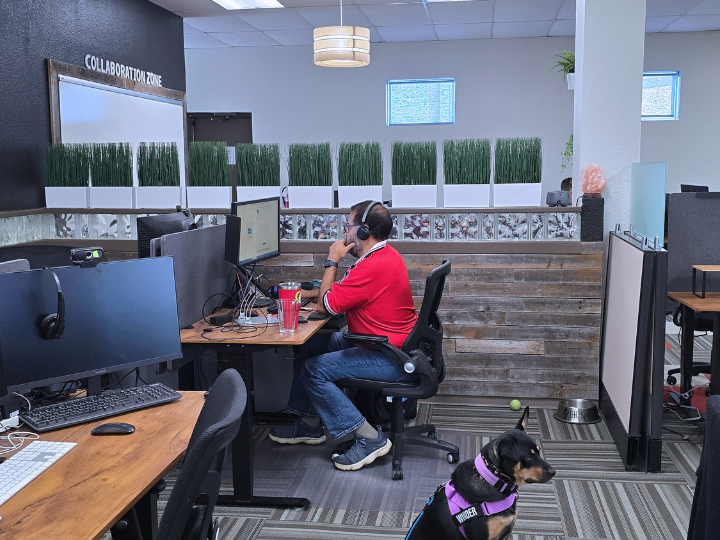
I've watched this play out repeatedly inside Ensemble over the last ten years. In our second year, a company started here in our open coworking space. The idea was good, but it needed time to gain traction and a lot of behind-the-scenes work to get it off the ground. More than nine years later, that company is thriving. It has multiple employees and eventually outgrew Ensemble.
I love that.
Our goal has never been to keep businesses here forever. We want to provide an environment where entrepreneurs and small business owners can work, connect, learn, grow, and eventually need something bigger than we can provide. Not every company will grow by adding employees, but they may grow through revenue, new products or services, expanded markets, or in other ways that make sense for their business.

Starting a business can be incredibly isolating, especially when you're working from home and trying to figure everything out on your own. Being around other entrepreneurs gives you access to conversations, perspectives, introductions, encouragement, and sometimes the person willing to ask the question you haven't considered yet.
That's one reason a strong small business community and coworking environment can be so valuable for startups and entrepreneurs.
I struggled with fear, lack of confidence, and gaps in my own skill set when I was developing the concept for Ensemble. I recognized my weaknesses and sought a partner with skills I didn't have and a brain that worked differently from mine. Having that person beside me helped me get past the overthinking, questioning, and temptation to stop altogether.
Surround yourself with people who will cheer you on, sometimes with requested feedback and other times simply as a cheerleader.
And a word to the wise: don't rely solely on your family to be those people. Often, the people who love us most are also the most protective. Their natural instinct may be to help us avoid risk, while entrepreneurship often requires us to become comfortable taking thoughtful risks.
Your Idea Needs a Next Step

If you have a business idea sitting in a notebook, on your laptop, or simply taking up space in your head, you don't have to know exactly where it will lead. Ask why it matters to you. Figure out whether you're solving a genuine problem.
Create something small enough to test. Take one action before everything feels perfect. And surround yourself with people who will challenge, encourage, and connect you along the way.
At Ensemble Coworking in Fort Worth, I've watched ideas become businesses and businesses become employers. None of them started with all the answers. They started by doing something.
Every idea deserves a next step. What's yours?


This is a really insightful and timely analysis of UK politics and the growing shift toward the politics of positive momentum and relatable leadership! Breaking down how different political figures tackle the current mood makes for a fascinating read. Just like keeping political strategies and public messaging organized, keeping properties and unwanted items cleared out efficiently is always helpful. If anyone ever needs a dependable vehicle removal service, you can check out cash for cars calgary or learn more through Junk A Car Calgary. Thanks for sharing this great article!